
How Are AI Embryo Selection and Epigenetics Being Applied in IVF? New Advances in U.S., Mexico, and Japan IVF Highlighted at Seminar
- wangyingzhe
- 2 days ago
- 3 min read

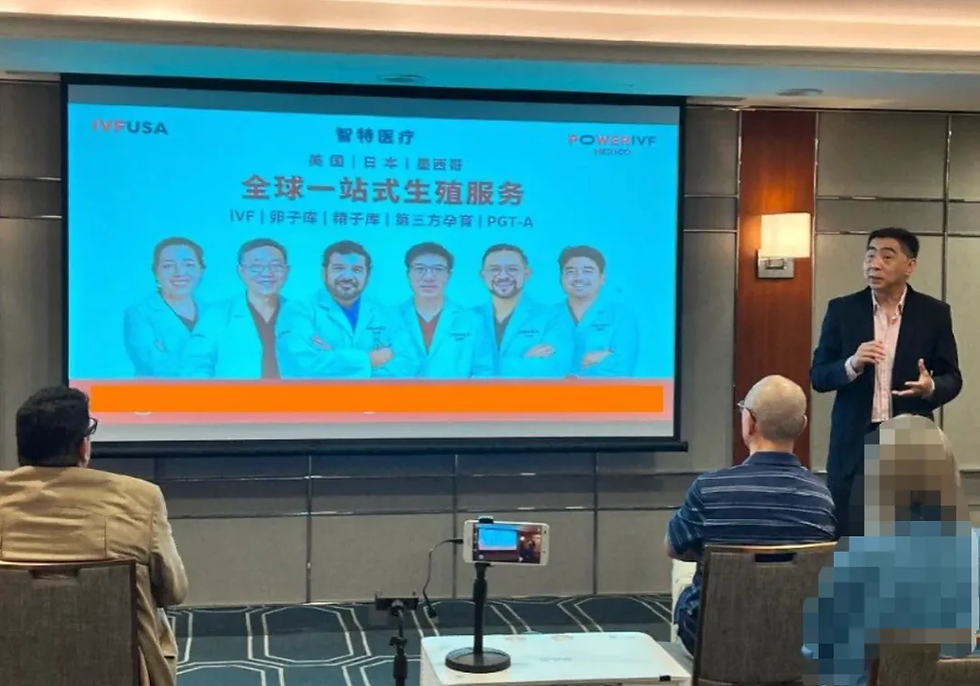
On July 5, 2026, IVF USA, together with Mexico's POWER IVF Fertility Center, hosted an in-person seminar in Shanghai focusing on IVF and egg freezing in Mexico, the United States, and Japan. Three internationally recognized reproductive medicine specialists shared the latest developments in global assisted reproductive technology. Topics including AI embryo selection, epigenetics, and laboratory technology upgrades attracted significant attention from attendees.
During the interactive session, guests raised questions that concern many prospective parents: Do fertility laboratories currently use Day 3 embryos or Day 5 blastocysts? Has artificial intelligence already been integrated into embryo selection? What new technologies are expected to enter clinical practice in the future?
In response, Dr. Wang explained that the clinic in Mexico currently adopts a more stable Day 5 blastocyst culture system.
Compared with earlier-stage embryos, Day 5 blastocysts provide more developmental information, offering physicians more comprehensive data when planning embryo transfer.
In addition to traditional morphological evaluation, the laboratory has introduced an artificial intelligence (AI)-assisted embryo scoring system. By combining AI analysis with established morphological standards, the laboratory can provide a more comprehensive evaluation of embryos and offer additional support when selecting high-quality embryos.
At the same time, the laboratory has also partnered with researchers from the Chinese Academy of Sciences to continue technical exploration in the field of epigenetics.
According to the experts, beyond chromosomes themselves, epigenetics focuses on the regulatory mechanisms that influence gene expression. In the future, this field may provide additional medical insights into embryo development. Although epigenetics continues to evolve, it is already regarded as one of the important future directions of assisted reproductive medicine.
The experts also emphasized that regardless of how advanced new technologies become, they must be supported by a mature and stable laboratory system.
From cell culture and embryo development to cryopreservation and quality control, every stage requires extensive experience and standardized management. For this reason, overall laboratory capability remains one of the most important indicators when evaluating a fertility center.
While introducing these technological developments, IVF USA also presented its integrated fertility network across Japan, the United States, and Mexico.
The Japan centers are well suited for early-stage fertility preservation; the U.S. centers offer advanced medical technology and comprehensive legal protection; and the Mexico centers provide flexible treatment options supported by inclusive policies and international biological specimen transportation, offering more diverse choices for families with different reproductive needs.
This seminar not only introduced the latest technological advances in international assisted reproduction but also helped attendees better understand the current development of AI embryo selection, epigenetics, and laboratory innovation. Founded by Dr. Nathan Zhang, the IVF USA team has specialized in international assisted reproductive consultation for more than a decade, providing services including U.S. egg freezing, U.S. IVF, and third-party assisted reproduction. With nearly 20 years of experience in international reproductive medicine, IVF USA recognized the growing demand for personalized fertility care early on and established a strong presence in Mexico, becoming the official China representative of Power Fertility Center (POWER IVF) in Mexico. Today, Dr. Nathan Zhang's services extend beyond the United States to include IVF and egg freezing in Mexico, Japan, and Thailand, as well as services in Taiwan and Hong Kong. Looking ahead, IVF USA will continue leveraging its integrated network across the United States, Mexico, and Japan to share professional knowledge and the latest medical advances in international assisted reproduction with more families.


Comments