
Is More Egg Retrieval Better for IVF? A Guide to IVF in the U.S., Mexico, and Japan with JapanIVF楠原

Once IVF treatment begins, the number of eggs retrieved is often one of the main concerns for people preparing for pregnancy. Some worry that too few follicles may result in an insufficient number of embryos, while others assume that retrieving more eggs automatically increases the chances of a successful pregnancy. In reality, IVF egg retrieval is not simply about maximizing quantity. The goal is to obtain a balance of egg quantity and quality based on the woman's age, ovarian reserve, follicle development, and subsequent embryo development plan.
How Many Eggs Should Be Retrieved During IVF?
The ideal number of eggs varies from person to person. Some women may retrieve more than a dozen eggs in one cycle, while others may retrieve fewer but still obtain embryos suitable for future use. Generally, retrieving 10–15 eggs is often considered a favorable reference range, but not every woman needs to reach this number.
The number of eggs retrieved is influenced by factors such as age, ovarian reserve, baseline follicle count, and the ovarian stimulation protocol. Younger women may have a stronger ovarian response, while ovarian reserve and egg quality may gradually decline with age. Doctors typically assess AMH, baseline hormone levels, and antral follicle count to estimate the expected response to stimulation and develop an individualized treatment plan.
Does Retrieving More Eggs Increase the Chances of Embryo Success?
Retrieving more eggs generally provides more opportunities for fertilization and embryo development. After fertilization, blastocyst culture, and IVF-PGT testing, a larger number of eggs may result in more embryos suitable for future transfer, giving families more options in their fertility plans.
However, not all retrieved eggs are mature, not every mature egg will fertilize successfully, and not all fertilized eggs will develop into blastocysts. The number of eggs retrieved therefore goes through several stages of selection before determining the final number of usable embryos. For families considering IVF-PGT for embryo chromosome screening, the ovarian stimulation protocol should also be planned in coordination with subsequent embryo culture and IVF-PGT testing.
How Is the Egg Retrieval Time Determined During Ovarian Stimulation?
Ovarian stimulation for IVF usually begins early in the menstrual cycle. Doctors use fertility medications to encourage multiple follicles to develop simultaneously, while monitoring their growth through transvaginal ultrasound and hormone testing.
As the follicles mature, doctors evaluate their size, number, and hormone levels before scheduling the trigger shot, commonly known as the “trigger injection,” to help the eggs complete their final stage of maturation. Egg retrieval is usually performed approximately 34–36 hours after the trigger injection. The exact timing depends on each woman's response to stimulation and the medical team's schedule.
During egg retrieval, the doctor uses ultrasound guidance to collect follicular fluid through a transvaginal needle. Embryology laboratory staff then identify and process the eggs. The eggs are subsequently fertilized with sperm through conventional IVF or ICSI. The resulting embryos continue to develop in the laboratory in preparation for future transfer and IVF-PGT testing.
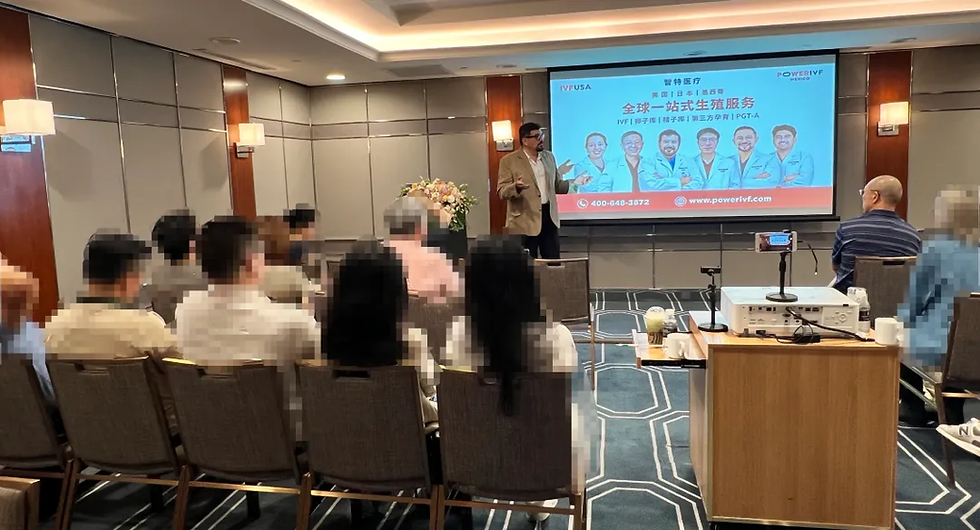
The IVF USA team, founded by Dr. Nathan Zhang, provides services including egg freezing and IVF treatment in the United States. With nearly 20 years of experience in the overseas assisted reproduction field, IVF USA recognized the increasingly diverse and personalized needs of people seeking fertility treatment and established a presence in Mexico and Japan at an early stage. The company became the representative in China for Power Fertility Center in Mexico and Kusuhara Women's Clinic in Japan, establishing a global fertility service model under the concept of “IVF in Japan, delivered worldwide.” Dr. Nathan Zhang's services have now expanded to include IVF and egg freezing in Mexico and Japan, as well as services in Taiwan, Hong Kong, and other regions. For families considering fertility treatment overseas, Dr. Nathan Zhang can help organize a plan for ovarian stimulation, egg retrieval, and embryo testing based on age, ovarian reserve, and individual reproductive goals, providing clearer direction for each step of the family-building journey.


Comments