
Requirements for U.S., Mexico, and Japan IVF: What to Know Before Trying to Conceive
- wangyingzhe
- 1 day ago
- 3 min read

In recent years, more and more families have started planning their fertility journey proactively. Before beginning treatment, many people ask the same questions: Is IVF suitable for everyone? What requirements need to be met before starting? Understanding these issues in advance can help reduce unnecessary adjustments throughout the treatment process.
Document Preparation Is Simple, but Pre-Treatment Evaluation Is Essential
For those pursuing fertility treatment overseas, the required paperwork is usually more straightforward than many people expect. Requirements vary by country, but in most cases, you only need a valid passport, visa, and relevant medical records.
What truly determines the treatment plan is not the paperwork, but the medical evaluation conducted beforehand.
Age Remains One of the Most Important Factors in Fertility Planning
Whether trying to conceive naturally or through assisted reproductive technology, age remains one of the most significant factors affecting success rates.
As women age, both the number and quality of eggs gradually decline, with more noticeable changes after age 35. The likelihood of chromosomal abnormalities in embryos also increases. For this reason, many people exploring IVF in the United States, Mexico, or Japan also pay close attention to egg freezing in these countries, hoping to preserve more reproductive opportunities for the future.
However, age is only one part of the evaluation and does not determine the final outcome. Physicians also consider AMH levels, antral follicle count (AFC), hormone profiles, and medical history before developing an individualized treatment plan.
The Uterine Environment Also Affects Embryo Implantation
Obtaining high-quality embryos is only one part of assisted reproduction. The condition of the uterus also plays an important role in pregnancy outcomes.
Before treatment begins, physicians evaluate endometrial thickness, the uterine cavity, and whether conditions such as fibroids, polyps, or intrauterine adhesions are present. If necessary, these issues are treated before starting the IVF cycle to create a more favorable environment for embryo implantation.
Overall Health Should Be Optimized Before Treatment
Individuals with hypertension, diabetes, thyroid disorders, or other chronic medical conditions should receive appropriate treatment before entering an assisted reproduction cycle.
At the same time, maintaining regular sleep habits, eating a balanced diet, exercising appropriately, maintaining a healthy weight, and avoiding smoking and excessive alcohol consumption can all help improve overall health, creating better conditions for ovarian stimulation and pregnancy.
IVF-PGT Has Become a Major Advantage for More Families
After fertilization, embryos are typically cultured to the blastocyst stage before undergoing preimplantation genetic testing. IVF-PGT helps identify embryos with greater developmental potential, improves overall pregnancy efficiency, reduces the risk of miscarriage associated with chromosomal abnormalities, and has made IVF-PGT increasingly important in clinical practice.
For individuals of advanced maternal age, those with recurrent pregnancy loss, or those seeking to further improve pregnancy success rates, IVF-PGT not only helps physicians develop more appropriate embryo transfer strategies but also makes the entire fertility journey more scientifically guided.
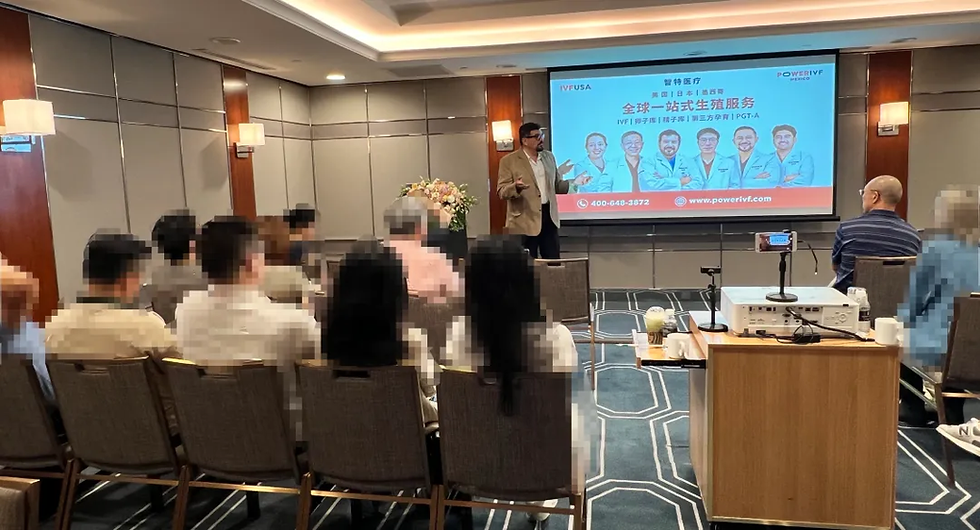
The IVF USA team founded by Dr. Nathan Zhang has been providing international fertility consultation services for more than a decade, offering U.S. egg freezing, U.S. IVF, and third-party reproductive services for those in need. With nearly 20 years of experience in overseas assisted reproduction, IVF USA recognized the growing diversity and personalization of fertility needs early on and established its presence in Mexico, becoming the Chinese representative of Power Fertility Center (POWER IVF) in Mexico. Today, Dr. Nathan Zhang's services have expanded beyond the United States to include IVF and egg freezing in Mexico, IVF and egg freezing in Japan and Thailand, as well as services in Taiwan and Hong Kong. Continuing to follow the professional educational content shared by IVF USA and Dr. Nathan Zhang can help individuals develop more personalized fertility plans based on their own circumstances, gain a more comprehensive understanding of IVF-PGT and assisted reproductive options, and approach every step of their fertility journey with greater confidence and preparation.


Comments