
How Can LES Couples Have a Child Together? A Guide to IVF in the U.S., Mexico, and Japan with JapanIVF楠原

As family structures and approaches to parenthood become increasingly diverse, more LES couples are beginning to plan for parenthood together. For female couples who wish to have a child together, IVF offers several possible paths to building a family.
Couples can choose different treatment combinations based on both partners’ ages, ovarian reserve, uterine conditions, and reproductive goals.
A Egg, B Carries: One partner provides the eggs, which are fertilized with sperm from a sperm bank. The resulting embryos are then transferred to the other partner, who carries the pregnancy. This approach allows one partner to contribute genetically while the other experiences pregnancy and childbirth.
A Egg, A Carries or B Egg, B Carries: One partner provides the eggs, which are fertilized using sperm from a sperm bank. The same partner then carries the pregnancy.
AB Eggs, A Carries: Both partners provide eggs, which are fertilized with sperm from a sperm bank to create embryos. One partner then carries the pregnancy. This arrangement allows both partners to participate in embryo creation. The specific treatment plan should be developed based on the results of their medical evaluations.
Once a reproductive plan has been established, the initial preparations mainly involve medical examinations, clinic selection, and sperm bank screening.
For medical examinations, the partner providing the eggs will generally need AMH testing, baseline hormone testing, an antral follicle count, and a gynecological ultrasound to assess ovarian reserve and suitability for ovarian stimulation. The partner planning to carry the pregnancy will need an evaluation of the uterus, endometrium, and overall health to prepare for the subsequent embryo transfer.
The source of sperm is also an important part of treatment planning. The United States has a wide range of sperm bank resources. Couples can review donor health screenings, genetic backgrounds, and personal profiles according to their preferences, then complete the selection process in accordance with the clinic's requirements.
After arriving in the United States, the partner providing the eggs will generally undergo an initial consultation and examination, including blood tests and an ultrasound. Based on the results, the doctor will develop an ovarian stimulation protocol. Medication is used to promote the simultaneous development of multiple follicles, with ongoing monitoring of follicle size and hormone levels.
Once the follicles reach the appropriate stage of maturity, the doctor will schedule the trigger shot and egg retrieval procedure. The retrieved eggs are fertilized with the previously selected sperm, followed by fertilization and embryo culture. Embryos are generally cultured to the blastocyst stage, after which IVF-PGT genetic testing can be performed to assess their chromosomal status and provide information for subsequent embryo selection and transfer.
After testing is completed, the doctor will arrange the embryo transfer based on the embryos' characteristics and the endometrial condition of the partner carrying the pregnancy. For couples following the A Egg, B Carries approach, the embryo will be transferred into the uterus of the partner carrying the pregnancy, who will then continue through the pregnancy.
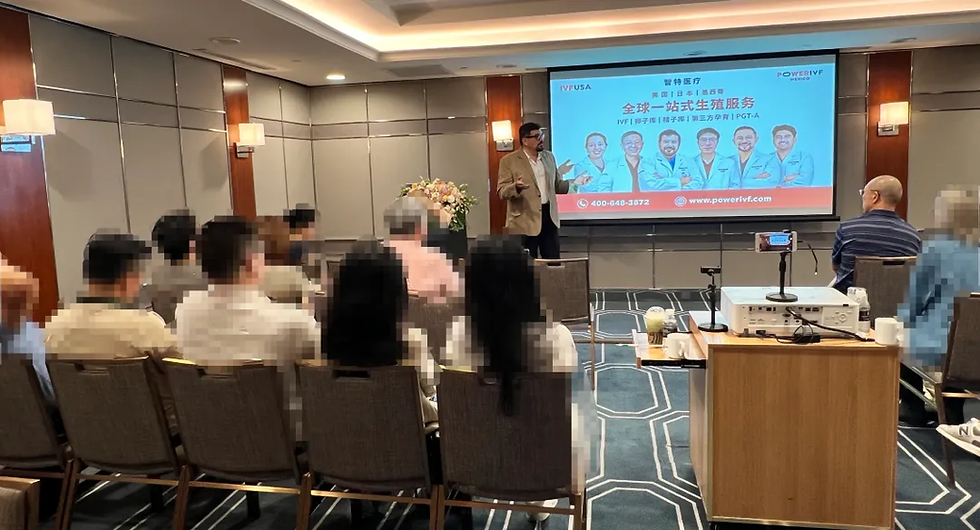
The team at IVF USA, founded by Dr. Nathan Zhang, provides services including egg freezing and IVF in the United States. With nearly 20 years of experience in international assisted reproduction, IVF USA has expanded into the Mexican and Japanese markets in response to increasingly diverse and personalized reproductive needs. The company is the Chinese representative of Power Fertility Center in Mexico and Kusuhara Women's Clinic in Japan, offering a global reproductive care model under the concept of “Japan IVF, Delivered Worldwide.” Dr. Nathan Zhang's services have now expanded to include IVF and egg freezing in Mexico and Japan, as well as services in Taiwan and Hong Kong. For female couples who wish to have a child together, Dr. Nathan Zhang and his team can assess both partners' medical conditions and family plans, and help coordinate sperm selection, IVF protocols, embryo testing, and cross-border treatment arrangements, providing a clear plan for each stage from preparing for pregnancy to welcoming a new family member.


Comments